Feeling the Full Embrace of Obon
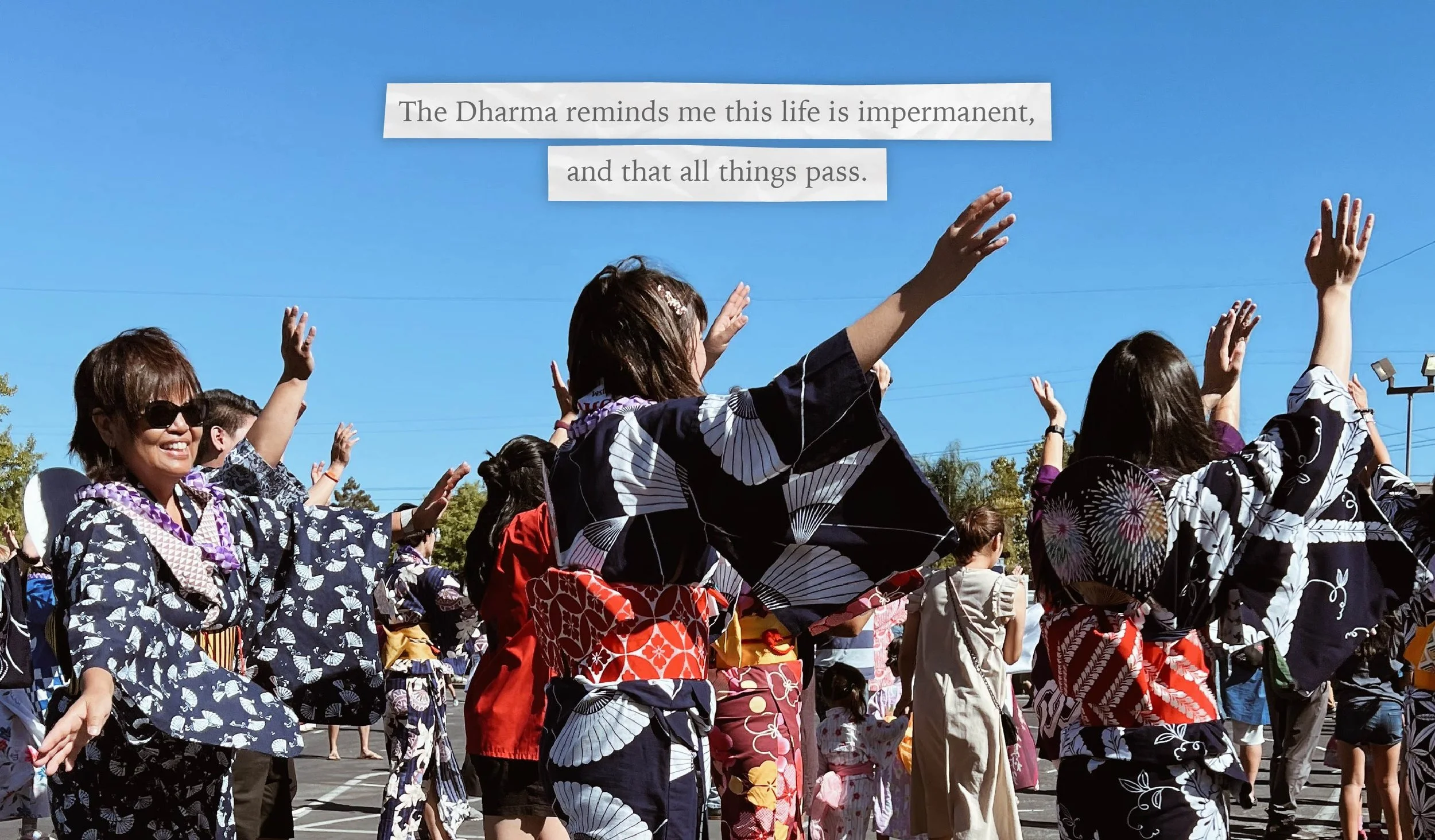
Obon dancers at Palo Alto Buddhist Temple
As a Jodo Shinshu convert, it sometimes takes me a while to fully appreciate the depth and beauty of certain Japanese traditions—especially Obon and Hatsubon. When I first joined the Vista Buddhist Temple sangha (January 2018), I made a simple commitment: just show up, join in, and trust that understanding would come in time.
So I did just that. I showed up. I joined the dances. I volunteered. I laughed. I smiled when I turned and unexpectedly found coworkers in the dance circle. I paid respects as the years brought loss to members of our sangha. And still, a part of me felt—understandably—just a little outside.
That first year, I lost three family members in the span of three days. I did not submit their names for Hatsubon. I was grieving, but still felt too much like an outsider; I wasn't sure how fully I belonged. Over time, through listening to the Dharma, I have come to more deeply appreciate what it means to be embraced—just as I am—by Amida's Primal Vow, and by this sangha. Although I could feel the Dharma working on me, the sense of being just a little outside remained. It was not until last year that something truly shifted.
2025 was my mother's Hatsubon year, the first Obon since she passed. My mother was neither Buddhist nor part of our sangha, but she was most definitely part of the causes and conditions that made it possible for me to be both. As Shinran Shōnin teaches, we come to hear the Name through many causes and conditions. My mother didn't want a funeral, so we didn't have one. The world moved on—and I tried to as well.
When I included her name for Hatsubon, I had no idea how meaningful it would be—to hear her name read aloud once more in community, to see it in writing, and to bow before it in gratitude. I had no idea how meaningful it would be to see dear sangha friends bow in recognition of those same causes and conditions, or to witness others experiencing similar grief in that same moment. I had no idea how much it would mean to know that a lantern bearing her name had been lit—and to dance with gratitude, and yes, even joy, surrounded by sangha. In those moments, something shifted.
These Obon and Hatsubon traditions give us space to acknowledge our grief, and to support one another as we learn to live alongside it. At the same time, they gently turn us toward gratitude—for this fleeting life, and for all those who have come before us. The Dharma reminds us that this life is impermanent, and that all things pass. This is not a teaching meant to discourage us, but to awaken us—to the preciousness of this life, and to the deep interconnectedness that makes our lives possible.
This is the beauty of our sangha, and of the traditions entrusted to us. They hold us—whether we feel fully inside or still finding our way—and, in time, they allow us to discover their meaning for ourselves. If you already feel this in your bones, how wonderful. If you're still waiting to feel it, please don't worry. Through causes and conditions, it will come in its own time.
I invite you, dear sangha, to join me this Obon season—to dance in joy, in remembrance, and in gratitude.
Namo Amida Butsu.