What Your Perceptions Are Really Telling You
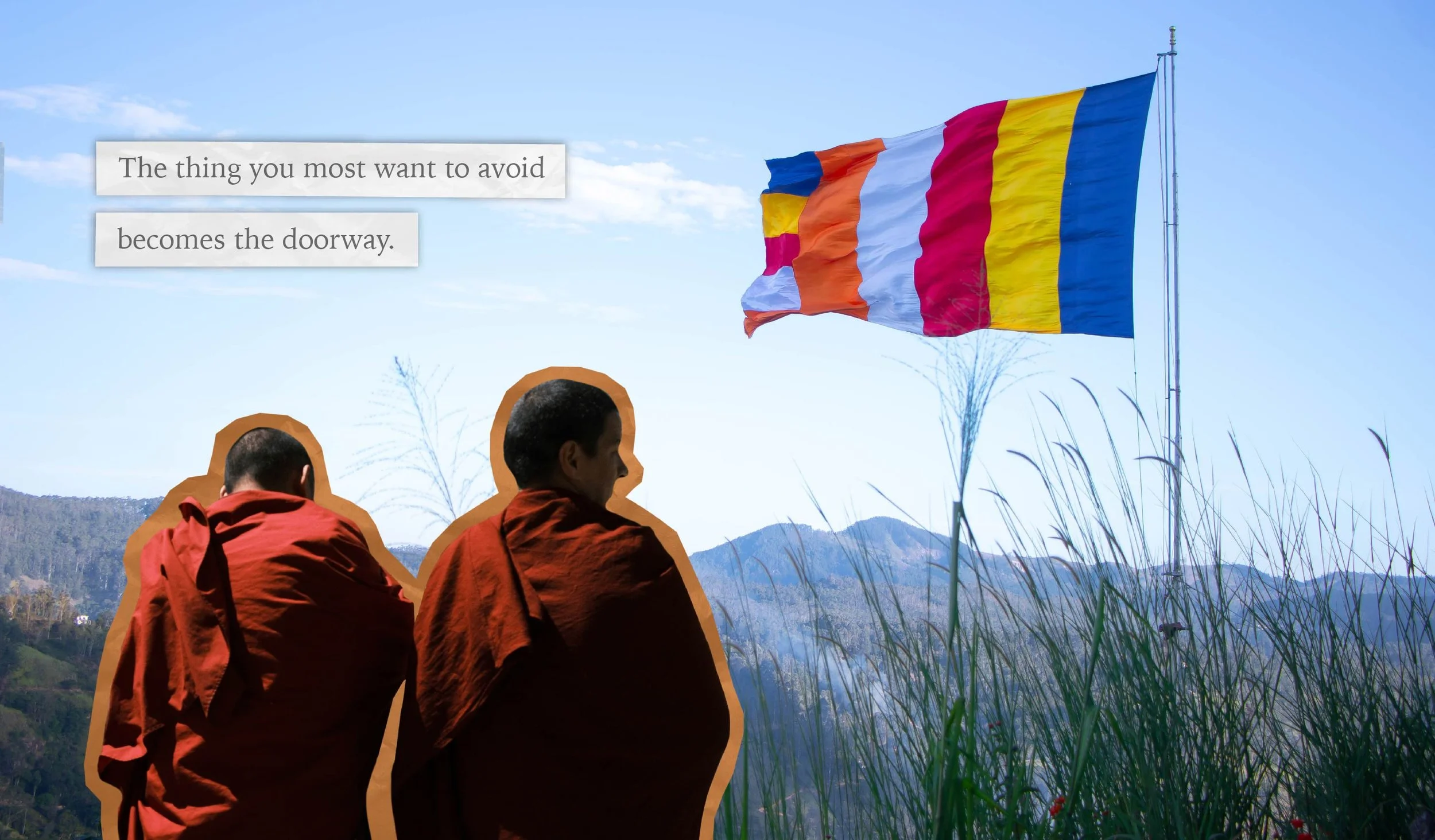
Buddhist flag blowing in the wind with mountains in the background
Not the Wind, Not the Flag
There is a Buddhist story about two monks watching a flag snap in the wind. One says, "The flag is moving." The other says, "No, the wind is moving."
A third monk passes by and says, "Neither the flag nor the wind is moving. Your minds are moving." The third monk is pointing at a common Buddhist teaching: The world we experience is largely constructed by the lenses we filter things through without even knowing. What are the lenses we look through?
The Sixth Sense
In the West, we grow up counting five senses: sight, hearing, smell, taste, and touch. Buddhism has always counted one more: the mind itself. This isn’t a sixth sense like being clairvoyant. The Buddha taught the eye, ear, nose, tongue, and body each have their corresponding outer objects: sights, sounds, smells, tastes, and physical sensations. The mind's corresponding objects are mental phenomena — concepts, intentions, memories, emotional tones. And like the other senses, these objects arise and pass. Just as a smell comes and goes, so do thoughts. All the objects our sense meet produces a feeling tone — pleasant, unpleasant, or neither. And from that feeling tone, almost instantly, craving or aversion arises. This is what forms our perceptions and the story we tell.
Analyzing the Situation
Think about something that disturbed you. Maybe it was a critical comment, an unexpected change, a person who gets under your skin. Our typical impulse is to analyze the situation. What happened? Who's to blame? How do I fix it?
Buddhism suggests turning the gaze around. Not to dismiss what happened externally, but to notice what arose internally. What story did you tell yourself? What did you assume? What does your reaction reveal about you? Maybe hinting at what you're protecting, longing for, or afraid of. This is the practice of perspective. It’s not detachment but clear seeing. The irritating coworker becomes a mirror. The difficult conversation becomes a teacher. The thing you most want to avoid becomes the doorway.
Return to those two monks for a moment. One says the flag is moving. One says the wind is moving. The third says: neither it’s your minds that are moving. The third monk is pointing directly at the sixth sense. The flag and the wind are real, but the meaning of what's happening — the argument, the certainty, the need to be right — this is the mind-sense. How can we apply this teaching to everyday life?
Everyday Buddhist Tip
Choose one situation this week that triggers a reaction — frustration, anxiety, judgment, or defensiveness. It doesn't need to be large. In fact, the smaller the better at first. When the reaction arises, pause. Not to suppress the feeling, but to notice it. Ask yourself, "What story am I telling about this right now?" Then ask, "Is this the only possible story?"
You don't need to immediately replace the story with a better one. Just notice that it is a story — a constructed interpretation, not objective reality. The story came in through the mind-sense, conditioned by everything you've experienced before this moment. Sit with that space for a moment.
Over time, this brief pause reveals something quietly profound: we are not simply responding to the world. We are, in part, creating it — moment by moment, thought by thought, through a sixth mind-sense that has been running all along without our knowing it.
Learn More
To explore the senses further, check out the Consciousness-Only video lecture in the Understanding | From Practice to Philosophy course. If you'd like to dig deeper into your own story, the Living | Metaphors, Myths and Narratives course has a lot to offer. Both are available through your subscription. If you're not yet a subscriber, you can learn more here.